Choosing between a single-family home and a townhome in Mountain View is not just about price. It shapes your daily routine, privacy, outdoor space, and even how you manage maintenance. If you commute to a nearby tech campus, love Castro Street dining, or want room for an ADU, the right fit can look very different. In this guide, you’ll get a clear, local comparison of costs, lifestyle, maintenance, insurance, commute patterns, and resale so you can move forward with confidence. Let’s dive in.
Snapshot: what shapes the decision
Public market trackers in early 2026 placed Mountain View’s citywide medians in the mid to upper one millions, and they reminded buyers that results vary by source and method. More importantly, detached single-family homes typically sell above attached homes because you are buying land, yard space, and standalone privacy. Townhomes and condos often serve as more attainable entry points while still carrying premium Bay Area pricing.
When you compare options, use neighborhood-level data, not a single citywide number. In small markets like Mountain View, a few high-end closings can swing monthly medians. A 6–12 month rolling view or price per square foot by ZIP can make comparisons more reliable.
Where each home type lives in Mountain View
You’ll see patterns block by block:
- Downtown and Old Mountain View around Castro Street have more condos, mixed-use buildings, and some townhomes. This area is walkable to restaurants, nightlife, and the intermodal Transit Center. The city’s patio program reflects how active and pedestrian-friendly the corridor is, especially evenings and weekends. Learn more about the city’s downtown patio licensing that supports a walkable dining scene on the official page for the Castro Street outdoor dining program.
- Transit-oriented townhomes cluster near Whisman Station, along San Antonio and El Camino corridors, and in newer infill near Shoreline and North Bayshore.
- Single-family homes are common in neighborhoods a few blocks off downtown and south of El Camino, including pockets of Old Mountain View, Monta Loma, and parts of Cuesta Park.
If you want restaurants and transit at your front door, attached living near Castro or Whisman can be a strong fit. If you want a yard, privacy, and space to expand, a single-family pocket a short bike or drive from downtown often checks the boxes.
Privacy and outdoor space
- Single-family homes usually provide more separation between neighbors, private yards, and room for gardens or play space. Many lots can support an accessory dwelling unit, subject to state and city rules. You can review city housing and planning documents for parcel patterns and permitting in the City’s housing and planning resources.
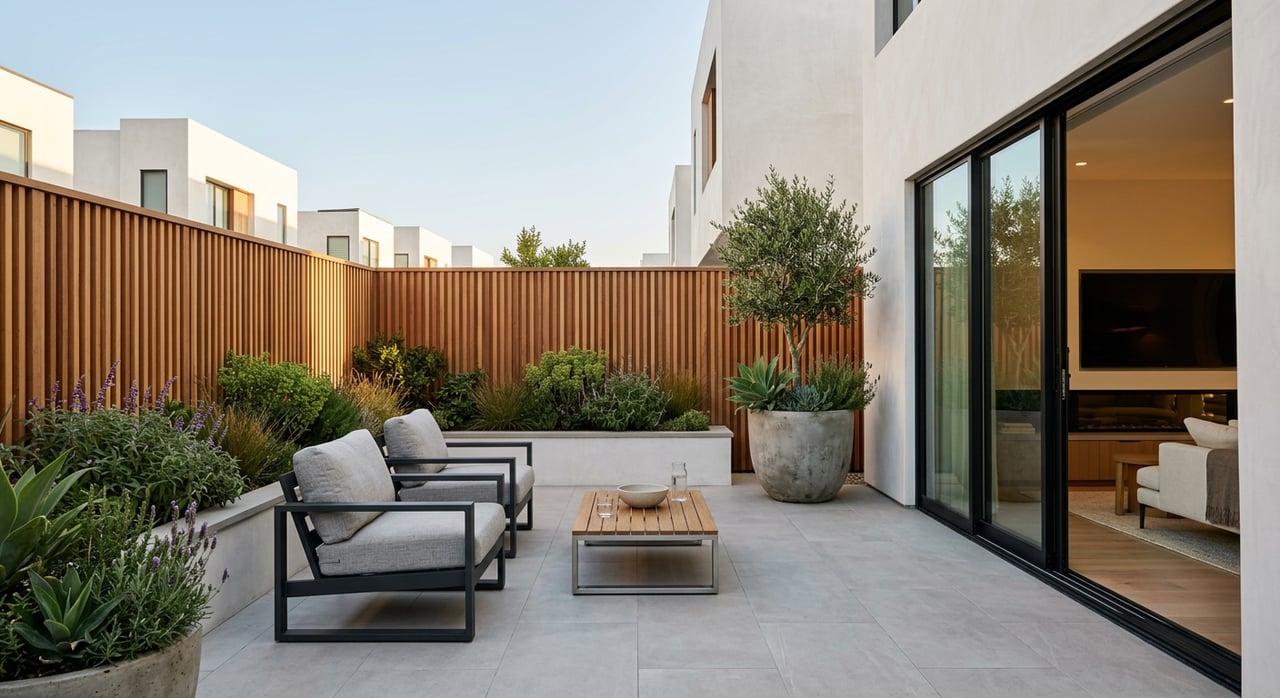
- Townhomes combine private interiors with smaller patios, balconies, or small rear yards. You’ll share walls, so interior noise and neighbor proximity are bigger considerations. Landscaping is often HOA-managed, which cuts your weekend yard chores but also reduces private yard square footage.
If having a dog run or hosting weekend barbecues in your own backyard matters, a detached home tends to make that easier. If you prefer a lock-and-go lifestyle, a townhome’s managed common areas may be the win.
Maintenance and HOA responsibilities
How maintenance works is often the deciding factor.
- In California, HOA obligations follow the state’s Davis–Stirling framework (including AB 968). Generally, associations handle common areas while owners maintain their separate interest interiors. Some exclusive-use elements, like patios or balconies, can be owner- or association-maintained depending on the CC&Rs. You can read the AB 968 chaptered bill for how maintenance responsibilities are allocated under Davis–Stirling.
- Local townhome HOA dues in Mountain View often range from the low hundreds to the mid six hundreds per month, depending on age, amenities, and what’s covered. Lower dues can mean fewer amenities or a leaner reserve; higher dues may include roofs, exterior insurance, pool, or extensive landscaping.
- As a single-family owner, you budget for yard care, roof, fences, exterior paint, and major systems like HVAC and sewer laterals. A common planning rule is to set aside about 1–3% of home value per year for maintenance and big-ticket items. See an overview of typical upkeep budgeting in this guide to home maintenance costs.
Checklist when you compare a specific property’s HOA:
- Review CC&Rs and the maintenance matrix. Clarify who maintains roofs, siding, windows, balconies, fences, and private patios.
- Confirm master insurance coverage: building exterior included or “bare walls.”
- Read the most recent budget and reserve study. Look for special assessments in the past 3–5 years and whether reserves meet recommended levels.
- Note any use restrictions that matter to you, such as EV charging installations or exterior changes.
Insurance and property tax basics
- Insurance: Townhome and condo owners typically carry an HO-6 policy for the interior, improvements, and personal property, while the HOA’s master policy covers common areas and sometimes exteriors. Single-family owners carry HO-3 or HO-5 coverage for the structure and contents. To avoid gaps, confirm whether the HOA’s master policy is “all-in” or “bare walls.” You can review fundamentals in this primer on homeowners insurance basics.
- Property tax: In California, Proposition 13 sets a base 1% tax rate on assessed value plus local voter-approved assessments. Your effective rate varies by parcel. The Santa Clara County Assessor explains how the system works and how to check parcel-level levies in their overview of property tax basics.
In practice, a townhome’s purchase price is often lower than a similarly located detached home, so the absolute annual tax bill may be lower, even though the tax rules are the same.
Commute, transit, and nightlife
Mountain View’s value drivers are tightly linked to jobs and mobility.
- Major employers: The city lists large local employers, including Google, Intuit, LinkedIn, and others. Proximity to North Bayshore and Shoreline is a frequent priority for buyers. See the City’s published material on major employers and economic profile.
- Transit: Downtown is served by the Mountain View Transit Center with Caltrain and VTA connections. Living within walking distance or a short bike ride to the station can make non-car commutes far easier. For planning, you can reference the current Caltrain timetable.
- Nightlife: Castro Street is the hub for restaurants and evening activity, supported by the city’s ongoing patio program and street design that favors walkers. Learn more about the Castro Street outdoor dining framework.
If walkability to dinner and the train matters, attached options near Castro, San Antonio, or Whisman Station often win. If you want a guaranteed private commute route with easier parking and unloading, a single-family home closer to your campus shuttle or North Bayshore can be worth the premium.
A quick cost comparison you can run
Here is a simple way to compare a specific single-family home to a townhome on your shortlist:
- List all monthly costs for each property:
- Mortgage principal and interest
- Property tax estimate: start with about 1% of price plus local assessments, then divide by 12. Confirm parcel specifics through the County’s property tax overview.
- Insurance: HO-3/HO-5 for single-family, HO-6 for townhome, adjusted for master policy details
- HOA dues for the townhome (and any special assessments)
- A maintenance reserve: plan 1–3% of value annually for a single-family; for a townhome, you may choose a smaller personal reserve if the HOA covers roofs and exteriors
- Utilities and any services like landscaping
- Plug in representative numbers to see the tradeoff:
- Example townhome: Assume a purchase price that sets annual taxes near 1% plus bonds, a $450 monthly HOA that covers exterior, landscaping, and master policy, and an HO-6 policy for interior coverage. Add a modest personal maintenance reserve for interior items and appliances.
- Example single-family: Assume a higher purchase price, the same base tax formula, a full homeowners policy for the structure, plus a 1–3% annual maintenance reserve to cover roof, fences, and exterior systems. No HOA dues.
- Compare the totals against your priorities. If you value lower day-to-day upkeep and walkability, the townhome’s all-in monthly number may feel right. If you value privacy, yard space, and long-run land value, the single-family total may be a premium you’re comfortable paying.
Resale and liquidity patterns
In a land-constrained city like Mountain View, detached lots often hold long-term scarcity value. That said, short-term appreciation depends on micro-location, property condition, and monthly supply and demand. Because a few sales can move the needle, look at 6–12 month rolling medians or price per square foot in the specific ZIP or neighborhood when judging trends. For a decision today, anchor on recent comparable sales within a tight radius and similar specs.
Quick comparison at a glance
| Factor |
Single-Family Home |
Townhome |
| Privacy |
Maximum separation; no shared walls |
Shared walls; more neighbor proximity |
| Outdoor space |
Private yard; garden and ADU potential (subject to code) |
Patios/balconies; shared open space |
| Maintenance |
You manage roof, exterior, yard, systems |
HOA covers common areas; you handle interior per CC&Rs |
| HOA dues |
None |
Often low hundreds to mid six hundreds per month |
| Insurance |
HO-3/HO-5 for structure and contents |
HO-6 for interior; master policy covers common areas |
| Commute/walkability |
Often a short drive or bike; parking is easy |
Often closer to Caltrain, VTA, and Castro Street |
| Flexibility |
More freedom for improvements, subject to city code |
CC&Rs may limit exterior changes and uses |
| Resale lens |
Land scarcity supports long-run value |
More affordable entry, resale driven by location/amenities |
Which buyers fit where
- You prioritize walkability, lower exterior upkeep, and fast transit access: Focus on a townhome near Castro Street, Whisman Station, or along San Antonio and El Camino corridors.
- You want privacy, a yard, or room to add space later: Look toward single-family pockets in Old Mountain View, Monta Loma, or Cuesta Park, and review ADU potential with the city.
- You travel often or plan to rent part time: Factor HOA rules, guest parking, and master insurance in a townhome. For single-family, confirm local rules for short-term use and on-site parking.
How I help you decide
Choosing between these paths is easier when you see real numbers, on-street context, and clear tradeoffs. I build side-by-side comparisons with recent neighborhood comps, verified HOA documents, insurance realities, and projected monthly carry costs. If you prefer Mandarin, I can walk you through every step in your native language. When you are ready to compare options or value your current home, reach out to Payne Sharpley for a tailored plan. Get your instant home valuation.
FAQs
How do property taxes differ for townhomes vs single-family in Mountain View?
- California’s Proposition 13 applies the same rules to both; your tax is based on assessed value plus local levies, so a lower purchase price often means a lower absolute bill.
Does an HOA mean zero maintenance for a townhome?
- Not entirely; the HOA handles many exterior and common areas per the CC&Rs, but owners still maintain interiors and some exclusive-use areas, and dues or special assessments can change.
What insurance do I need for a townhome compared with a house?
- Townhome owners usually carry HO-6 for interiors and belongings while the HOA master policy covers common areas; single-family owners carry HO-3 or HO-5 for the full structure and contents.
Are townhomes noisier than single-family homes?
- Townhomes share walls, so interior sound transfer is a consideration; construction quality, layout, and neighbor behavior all affect the level of noise you perceive.
Can I add an ADU to a Mountain View property?
- Many single-family lots can support ADUs subject to state and city code; attached units generally have less flexibility to add a separate ADU on the same parcel, so always confirm with the city.
Which Mountain View areas have more attached options?
- You’ll find more condos and townhomes around Castro Street, Whisman Station, and the San Antonio and El Camino corridors, while single-family pockets are common in Old Mountain View, Monta Loma, and Cuesta Park.